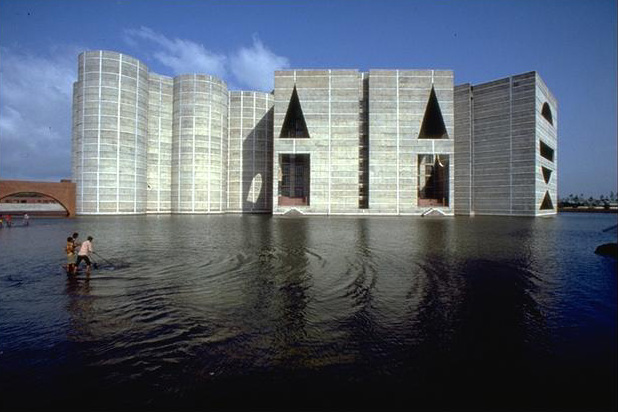
Jatiyo Sangsad Bhaban
 (6 vote, 100.00% worth checking out)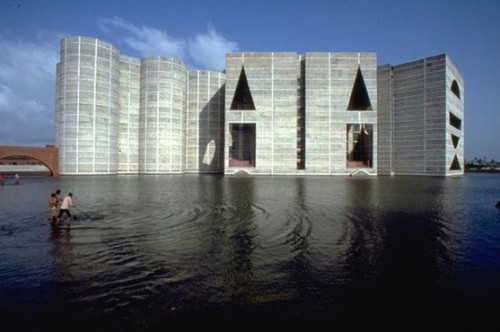
Location:
Mirpur Road
Dhaka
Bangladesh
coordinates: 23.7624683,90.3784485
open coordinates in google maps
open coordinates in apple map
Building names(s): Jatiyo Sangsad Bhaban / National Assembly Building
Architect/Designer: Louis Kahn
more images:
Completion date: 1982
completion date: 1982
function(s): civic, government
credentials/awards: 1989 Aga Khan Award for Architecture, Aga Khan Award for Architecture
construction cost: US$32 million
getting there:
Although entrance to the Bhaban, the Main Building, is limited to authorized members of Parliament and staff, the Jatiyo Sangshad complex is open to visitors. On the North of complex, across the Lake Road, is Crescent Lake and Zia Uddan (also called Chondrima Uddan). The two complexes together form a major attraction for tourists in Dhaka. The complexes are popular among joggers and skaters of Dhaka. The official Prime Minister’s Residence is on the North West corner of the Mirpur Road and Lake Road crossing and is a five minute walk from the Jatiyo Sangsad Bhaban. The area is one of the higher security zones of Dhaka.
The Complex can be accessed using any of the four roads surrounding it, however, the Manik Mia Avenue and Lake Road are the easiest approaches.