Hiroshige Museum

 (3 vote, 86.67% worth checking out)
 Location:
116-9, Bato, Nakagawa-machi
Nasu-gun
Bato
Tochigi 324-0613
Japan
coordinates: 36.7390938,140.1709595
open coordinates in google maps
open coordinates in apple map
Building names(s): Hiroshige Museum / Nakagawa-machi Bato Hiroshige Museum of Art
Architect/Designer: Kengo Kuma
more images:
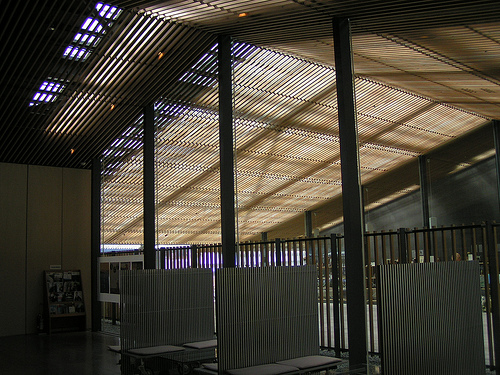
Completion date: 2000
function(s): gallery, museum
address in Japanese: 〒324-0613 栃木県那須郡那珂川町馬頭116-9 website: www.hiroshige.bato.tochigi.jp (English & Japanese) admission cost: 500 yen opening hours: 9:30 a.m. to 5:00 p.m. (depending on exhibition - check website for details) getting there: By Train and Bus From the JR Utsunomiya Station, walk to the nearby Miyanohashi Kita bus stop, and take the Toya Bus going to Bato. The bus takes about 1 hour and 40 minutes. Get off the bus at the Bato Yakuba Mae bus stop. From the Tobu Utsunomiya Station, take the Toya Bus going to Bato. The bus takes about 1 hour and 50 minutes. Get off the bus at the Bato Yakuba Mae bus stop. From the JR Ujiie Station, take the Toya Bus going to Bato. The bus takes about 50 minutes. Get off the bus at the Bato Yakuba Mae bus stop. From the JR Karasuyama Station, take the JR Bus going to Bato (the Jono route). The bus takes about 40 minutes. Get off at the Batomuromachi bus stop. By Car One hour from the Naka Interchange on the Joban Expressway. 50 minutes from the Yaita Interchange on the Tohoku Expressway. 50 minutes from the Utsunomiya Interchange on the Tohoku Expressway.