browse > Featured Architects > SANAA – Sejima & Nishizawa
SANAA – Sejima & Nishizawa
architect website: www.sanaa.co.jpSANAA (Sejima + Nishizawa and Associates) is an Architectural firm that is based in Tokyo. It was founded by Kazuyo Sejima and Ryue Nishizawa in 1995.
Kazuyo Sejima & Ryue Nishizawa
Kazuyo Sejima (b. 1956, Ibaraki Prefecture, Japan) studied architecture at the Japan Women’s University before joining the practice of architect Toyo Ito. She launched her own practice in 1987 and was named the Japan Institute of Architects’ Young Architect of the Year in Japan in 1992.
Ryue Nishizawa (b. 1966, Kanagawa Prefecture, Japan) studied architecture at Yokohama National University and, in addition to his work with Sejima, has also maintained an independent practice since 1997. He holds professorships at prestigious institutions such as Yokohama National University and the Ecole Polytechnique Fédérale de Lausanne.
Sejima and Nishizawa were jointly awarded the Golden Lion at the 9th Venice Architecture Biennale in 2004.
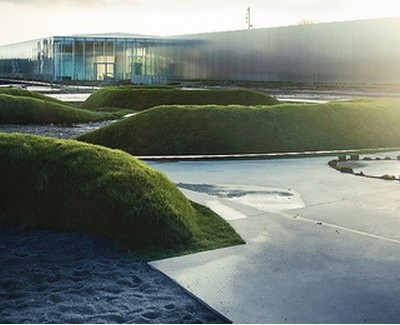
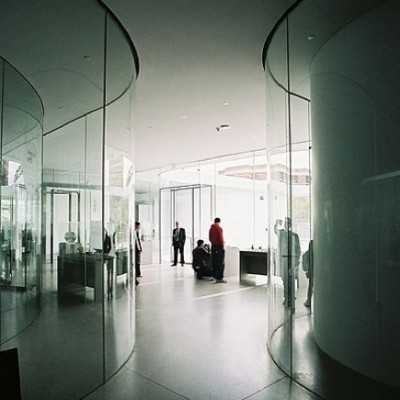
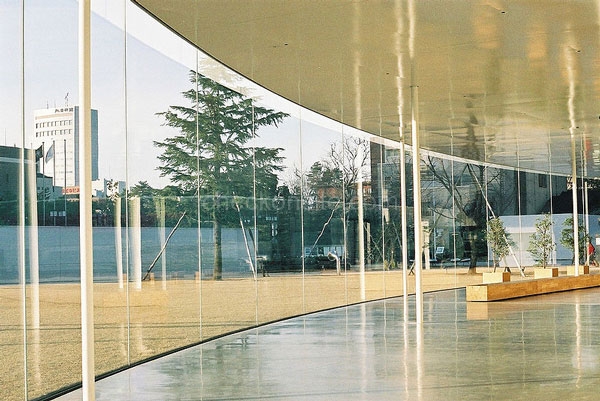
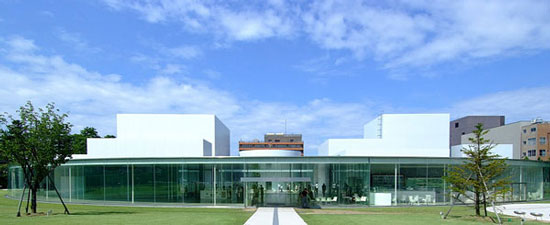
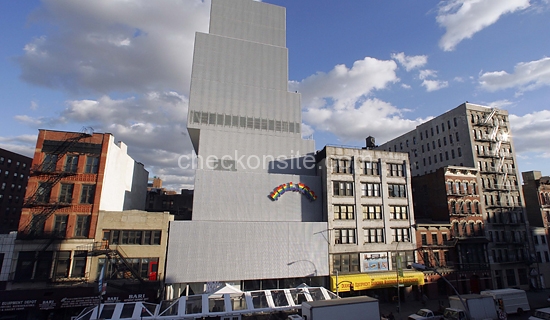
Sejima teaches as a Visiting Professor both at Tama Art University and Keio University in Tokyo and, with Ryue Nishizawa, holds the Jean Labatut Professorship at the School of Architecture at Princeton University, New Jersey, USA. SANAA’s numerous celebrated buildings include a satellite of the Louvre Museum in Lens, France; Toledo Museum of Art’s Glass Pavilion in Toledo, Ohio, USA; the New Museum of Contemporary Art in New York, USA, and the extension of the Institut Valencià d’Art Modern in Valencia, Spain. In Japan, SANAA’s work includes the N-Museum in Wakayama; the 21st Century Museum of Contemporary Art in Kanazawa, and the Onishi Civic Center in Onishi.
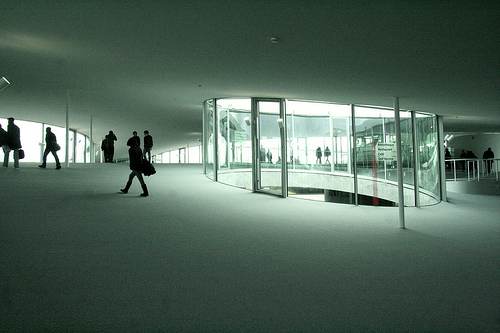
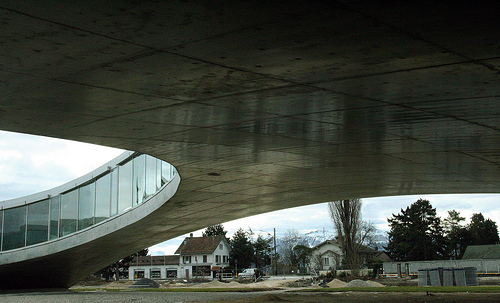
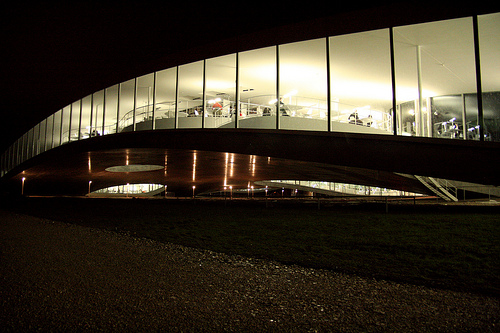
Rolex Learning Centre Interview with SANAA
Recent News
The upcoming 12th Intl. Architecture Exhibition directed by Kazuyo Sejima will be held from August 29th to November 21st, 2010, at the Giardini and at the Arsenale (preview August 26, 27 and 28, 2010), and in various other venues in Venice.
After a series of editions of the Architecture Biennale directed by eminent critics and historians, this Sector is once again in the hands of an architect, Kazuyo Sejima. The first woman to direct the Architecture Sector of the Biennale, Sejima has recently been awarded the prestigious Pritzker Architecture Prize 2010 (together with Ryue Nishizawa).

(3 votes, average: 4.00 out of 5)
Beyond its individual buildings, SANAA has established a system, an architectural language, which permits simple (sometimes over-simple) solutions to architectural problems, fast-track production and the exporting of projects across national frontiers. …
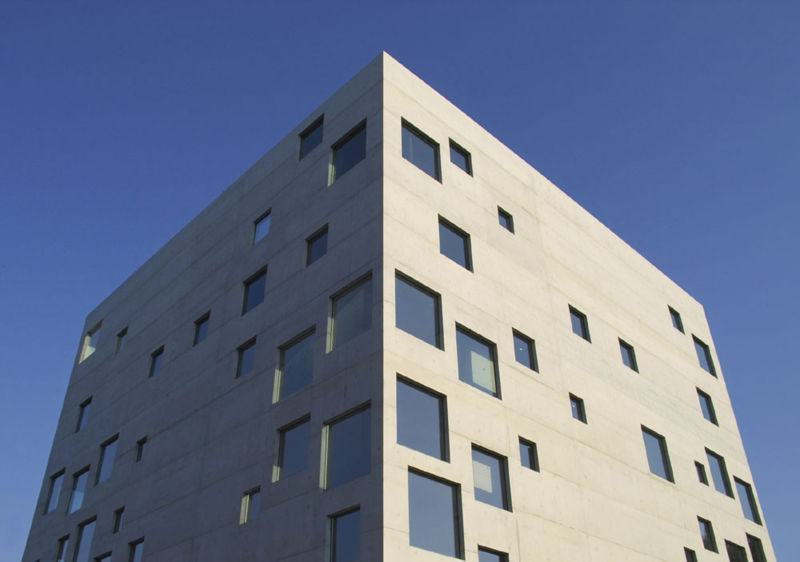
SANAA’s work explores transparency and materiality, skeleton and skin. Its delicate structures touch upon an old agenda in Japanese modern architecture, the reconciliation of industrial frames in concrete or steel with the qualities of traditional architecture constructed with wooden posts and beams.
Inevitably SANAA’s work raises theold question of the role of simplification in architecture. Ideally abstraction is the means to distil an underlying content, but if this is missing one risks ending up with elegant diagrams…
Their work is pleasing to the eye yet in no way disturbing (in contrast to the work of Peter Zumthor, which cuts deeper). Possibly too there are occasions when this ‘simplicity’ constitutes a refusal to face up to the complexities of architectural tasks.
Kazuyou Sejima and Ryue Nishizawa, partners in the Japanese architectural firm SANAA, have been named the 2010 Laureates of the Pritzker Architectural Prize. It is the second time in the Pritker’s 31-year history that the prize has gone to a pair and the second time its gone to a woman. The formal ceremony will take place on 17 May at Ellis Island in New York. At that time the architects will be awarded a $100,000 grant and bronze medallions.
While most of their work is in Japan, Sejima and Nishizawa have designed projects in Germany, England, Spain, France, the Netherlands and the United States. But it was the pair’s two buildings in the US, a glass pavilion for the Toledo Museum of Art (2006) and the New Museum in New York (2007) and two in Japan, the O-Museum, one of their first projects together, and the 21st Century Museum of Contemporary Art in Kanazawa that the jury cited as standouts.
Upon learning of her selection for the Prize, Kazauyo Sejima said, “ I am thrilled to receive such an honour. I would like to thank the Pritzker (Hyatt) foundation, the jury members, the clients who have worked with us, and all of our collaborators. I have been exploring how I can make architecture that feels open, which I feel is important for a new generation of architecture. With this prize I will continue trying to make wonderful architecture.” In a similar statement Rye Nishizawa said, “ I receive this wonderful prize with great humility. I am very honoured and at the same time very surprised. I receive and understand this prize as encouragement for our efforts. Every time I finish a building, I revel in possibilities and at the same time reflect on what has happened. Each project becomes my motivation for the next new project. In the same way this wonderful prize has given me a dynamic energy that I have never felt before. I thank you very much.”