Kunsthaus Bregenz


(4 vote, 80.00% worth checking out)
Show on map & checkout the other sites nearby Karl Tizian Platz 1
Bregenz
6900
Austria
coordinates: 47.5049973,9.7473516
open coordinates in google maps
open coordinates in apple map
Building names(s): Kunsthaus Bregenz
Architect/Designer: Peter Zumthor
Images:
Completion date: 1997
function(s): museum
website: www.kunsthaus-bregenz.at
Opening hours:
Tuesday – Sunday 10 a.m. – 6 p.m.
Thursday 10 a.m. – 9 p.m.
Admission: Euro 8
Tip: Architectural tour every first Sunday in the month at 11 a.m. Tour fee per person: € 4.00
Building Costs: 285 million Austrian Schilling / 41 million DM, of which 220 million Austrian Schilling / 31,5 million DM are construction costs
Museum building: 28,000 m³ interior floor, 3,3440 m2 usable space, 26.57 x 26.57 x 30 m
Administration building: 2,680 m³ interior floor, 540 m2 usable space, 8.35 x 21.57 x 11m
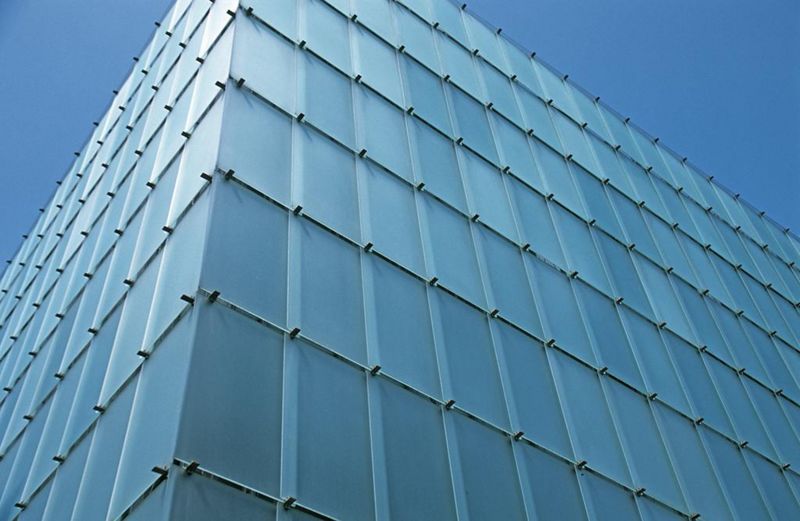
Outer facade: 712 glass shingles, 1.72 x 2.93 m each, VSG-compound safety glass
made of 2 x 10 mm float glass / white glass with a fourfold layered foil, outer side etched, weight per sheet: 252 kg
Steel frame facade: prefabricated steel framework elements of 27m length, 4.5 m width and 0.9 m depth, total weight: 180 t
1 comment/review
L Abache says:
May 29, 2009
The museum stands like a box of light on the shores of Lake Constance. Its inner light is ever-changing, depending on the type of exhibition installed inside, the time of the day and the color of the sky. The building was designed to catch light with all of its surface and then distribute it into the three levels of the gallery space plus the ground floor. The glass skin is a free standing structure supported by a metal frame; it also protects the interior concrete tower from rain and wind.
Between each gallery level there is a complete floor that is totally empty, a ‘light plenum’. This is were the external light is collected and then spread into the gallery space below. The gallery floor is a box of concrete without a top: the ceiling is made of glass panels. The amount of light caught by the gap between floors is enough to display some exhibitions without the use of any artificial light, and frees the wall surface from the need for window openings.
Zumthor has transformed technical and rational solutions into sensual and poetic situations. The way in which the glass shines against the light gives it a velvet-like visual texture; this softness continues inside where the concrete surface is polished and soft to the touch, and where accessory elements such as frames and handrails are either polished or totally matt.
The visitor moves through the building in a circular way, either taking the elevator to the top floor and then descending using the stairs or the opposite way around. This circular pattern is a result of the structural configuration of the space. The floor slabs are supported by three interior bearing walls located at the perimeters of the gallery. It is common for the curators of this museum to divide each exhibition in three parts following the organization of the building, and at the same time the formal neutrality of the spaces allows the institution to change the quality of the space with each exhibition.
However this is not a neutral building. Whatever concessions the space makes in terms of form and its straight forward circulation system are counterbalanced with the sensuality of the material and with the quality of the light.
The curatorial work of the team behind the Kunsthaus Bregenz is audacious, even aggressive, and exploits the possibilities of the building to its limits with every exhibition.
The program of the museum also asked for administration, shop and cafe space. The glass box was reserved for galleries and a smaller building made out of black concrete was designed to house these other uses, creating between the two volumes an empty area that is not quite a square or piazza but more like a left-over space with the potential for public occupation. Sometimes the exhibition spills out of the building into this space, and when the weather is fine the café also takes possession of it.